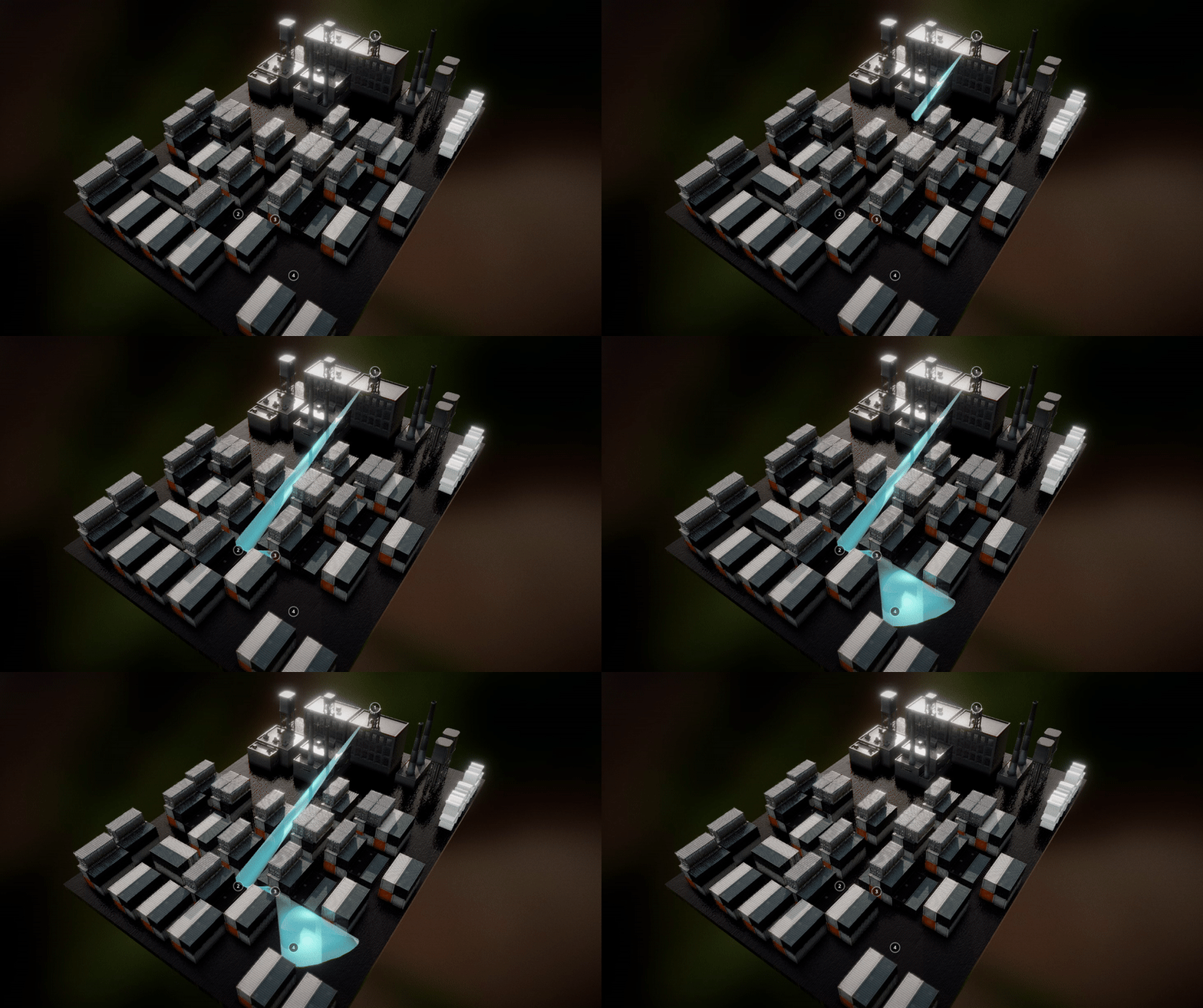
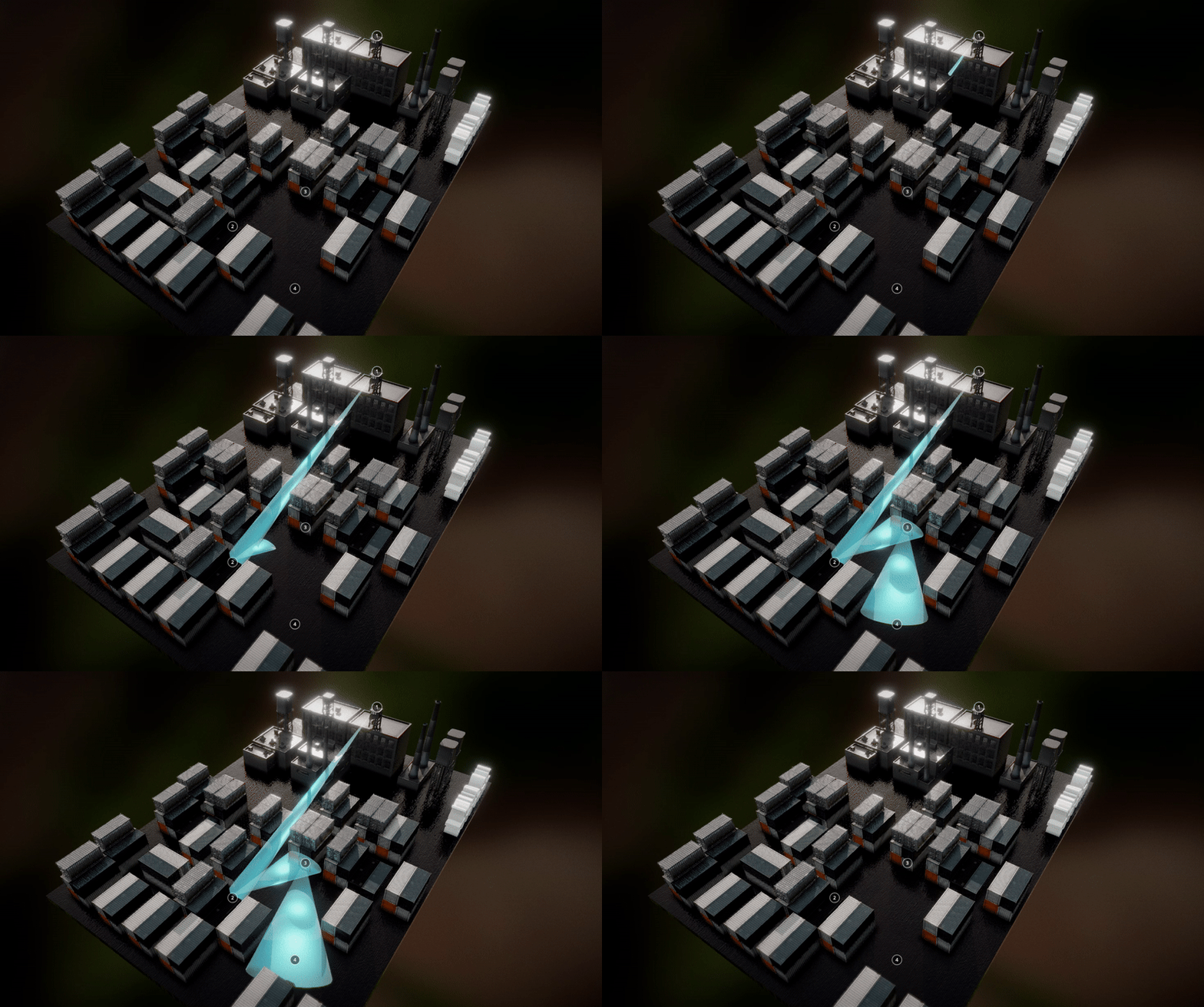
This project develops Sionna-enabled large-scale ray tracing workflows for AI-RAN and integrated sensing and communication research. The work focuses on measurement-calibrated urban RF modeling, wireless digital twins, and simulation pipelines that connect realistic propagation behavior with AI-native RAN control and ISAC evaluation. Instead of treating the simulator as a standalone channel generator, the project uses ray tracing as a bridge between physical layout, semantic context, and AI-driven wireless decision making.
Digital Twin Workflow
The workflow combines scene-level geometry, semantic environment information, and Sionna-based ray tracing outputs. This makes it possible to connect physical layouts and object classes with channel behavior, sensing coverage, and RAN decision-making policies. A digital twin can be used to generate repeatable experiments for beam selection, blockage-aware control, sensing viewpoint selection, and AI-RAN policy evaluation before moving to field measurements.
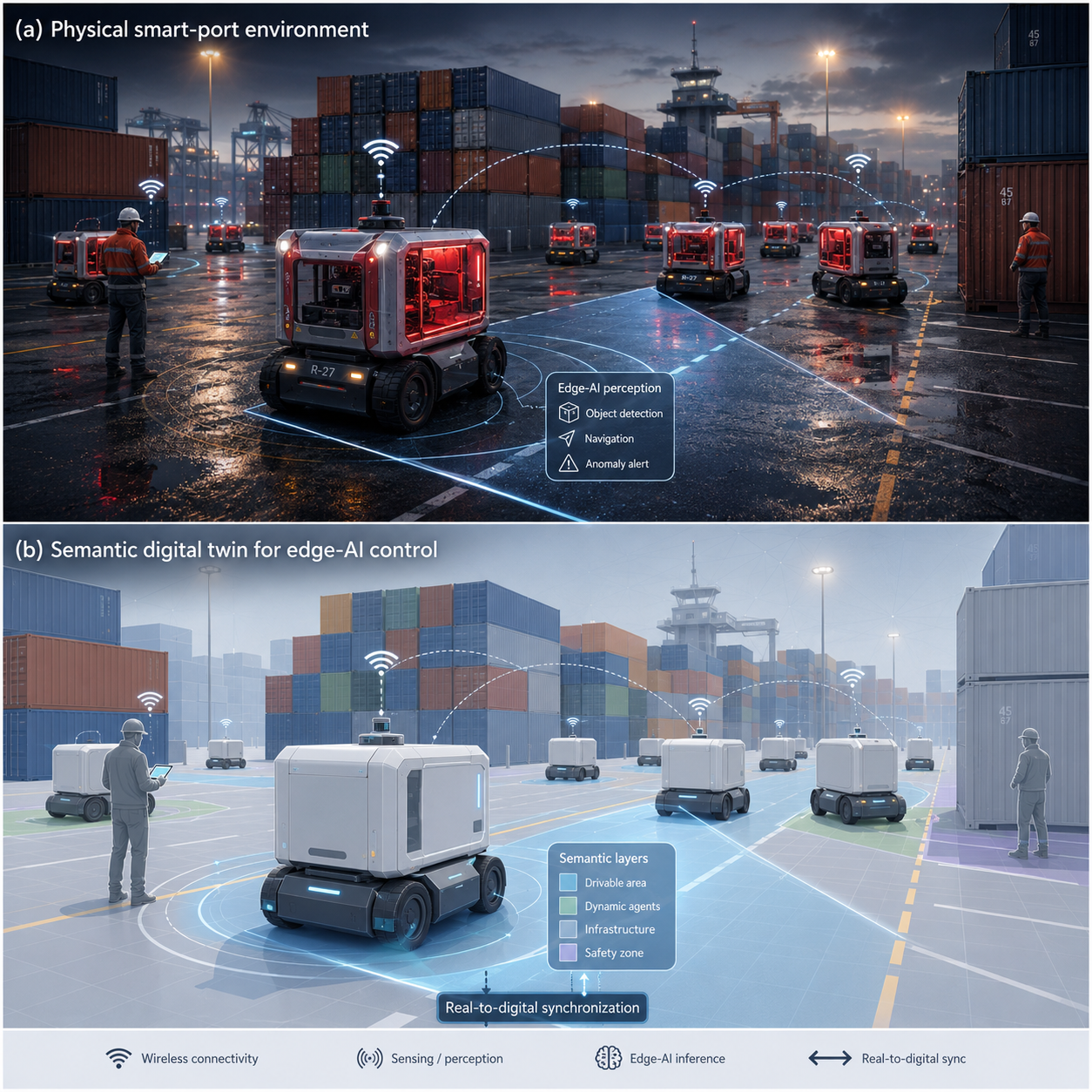
The semantic representation adds another layer to the propagation model. By identifying object classes and spatial context, the system can reason about why a link or sensing path changes, not only that it changes. This is useful for training AI models that need to generalize across environments and for building explainable control loops in AI-RAN and ISAC systems.
Research Focus
- Large-scale Sionna ray tracing for urban wireless environments
- Measurement-calibrated RF channel and propagation modeling
- Wireless digital twins for AI-RAN control and optimization
- ISAC evaluation under realistic geometry, mobility, and blockage conditions